
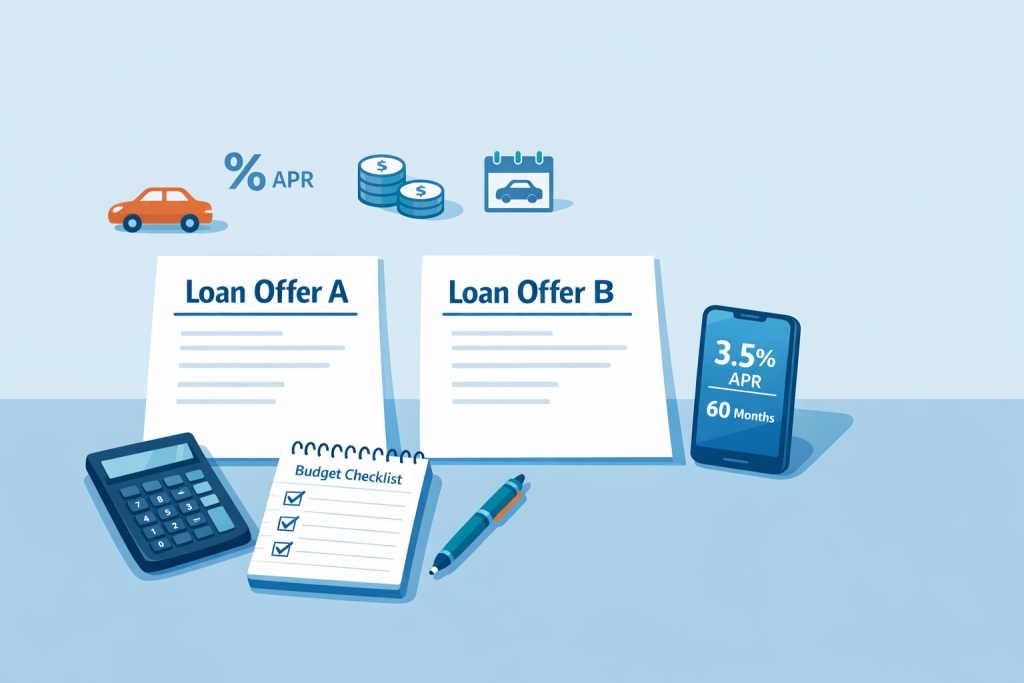
A lower monthly payment can look like the best deal when you’re shopping for a car. But before you choose it, step back and confirm two things: how much you’re actually borrowing and how long you’ll be paying it back. The smartest comparisons weigh the full cost of financing alongside what the payment does to your day-to-day budget.
You don’t need to be a finance expert to ask the right questions. Get each offer in writing, compare the same numbers across proposals, and give yourself time to follow up on anything that doesn’t match what you were told.
Start with comparable offers
Put the vehicle price, down payment, and trade-in details beside each proposal. If those figures change, you are comparing more than financing. A smaller payment may reflect a larger down payment or a different vehicle rather than a better loan.
Check how much is being financed
Ask for an itemized explanation of the amount financed. Review taxes, fees, and any optional products included in the transaction. If a charge is unfamiliar, ask what it covers and whether it is required before accepting it.
Keep a copy of each proposal and note when you received it. Ask how long the quoted terms remain available and what conditions still need to be met. Treat an estimate as an estimate until the lender confirms the actual terms.
Read the borrowing costs together
The Consumer Financial Protection Bureau recommends comparing the amount borrowed, APR, interest rate, loan length, and monthly payment. Write them beside one another so you can see which part of the offer changed.
Understand what APR tells you
APR is the annual percentage rate. The CFPB’s explanation of loan disclosures describes it as the cost of credit, including interest and mandatory fees, expressed as a yearly percentage. It is different from the interest rate alone.
APR is useful, but it does not replace the rest of the comparison. A proposal with a lower APR can still involve a larger amount financed or more payments. Read the numbers as parts of the same agreement.
Look at the length of the commitment
With the same amount borrowed and interest rate, stretching repayment over more months lowers the monthly payment but increases total interest. That is the tradeoff to examine when a lender presents several terms.
Ask yourself whether the shorter term fits your budget without relying on overtime or another uncertain source of income. If neither option leaves enough room, revisit the purchase price instead of choosing a term solely because it makes the payment smaller.
Check the total before signing
The disclosure’s finance charge shows the interest and certain fees you will pay over the loan’s life if payments are made as scheduled. The total of payments shows the sum of scheduled payments. Review both, along with the amount financed.
Resolve differences in writing
If the payment or total differs from an earlier proposal, ask for an explanation. It may reflect a changed term, an added product, or another adjustment. Request revised paperwork that makes the final arrangement clear.
Read the payment schedule and any late-payment or prepayment provisions. Ask questions before signing, and keep copies of the completed documents. Do not rely on a verbal explanation that conflicts with the agreement.
Leave room for the car itself
The loan payment is only one part of owning a vehicle. The CFPB’s affordability guidance also includes insurance, fuel, and routine maintenance when considering costs. Obtain an insurance quote for the vehicle you are considering, then add expenses that apply to your commute.
A simple car budget spreadsheet can help you organize those figures. Give the loan payment and operating expenses separate rows, and mark which amounts are confirmed. That makes an uncertain repair allowance visible instead of burying it inside one total.
Test your remaining breathing room
After essential household expenses and car costs, what is left? Use your actual budget rather than an affordability percentage chosen without context. Consider how you would handle a higher expense month before committing to a payment.
Keep upfront cash needs separate. A down payment that reduces borrowing also uses savings, so check what funds remain afterward. The decision involves both the monthly commitment and the cash you have available now.
Make the final comparison on paper
Before accepting an offer, place the completed terms beside your budget and check that the vehicle, amount financed, APR, payment schedule, and optional products match your decision. Ask who will service the loan and how to contact them. A clear written comparison gives you a specific agreement to evaluate before the car purchase moves forward.